Most of the workforce conversation in Australian oil and gas over the past two years has pointed west. Scarborough. Barossa. The North West Shelf. WA’s LNG construction boom has dominated the hiring market, the apprenticeship pipeline discussion and the workforce planning agenda of every major operator in the country.
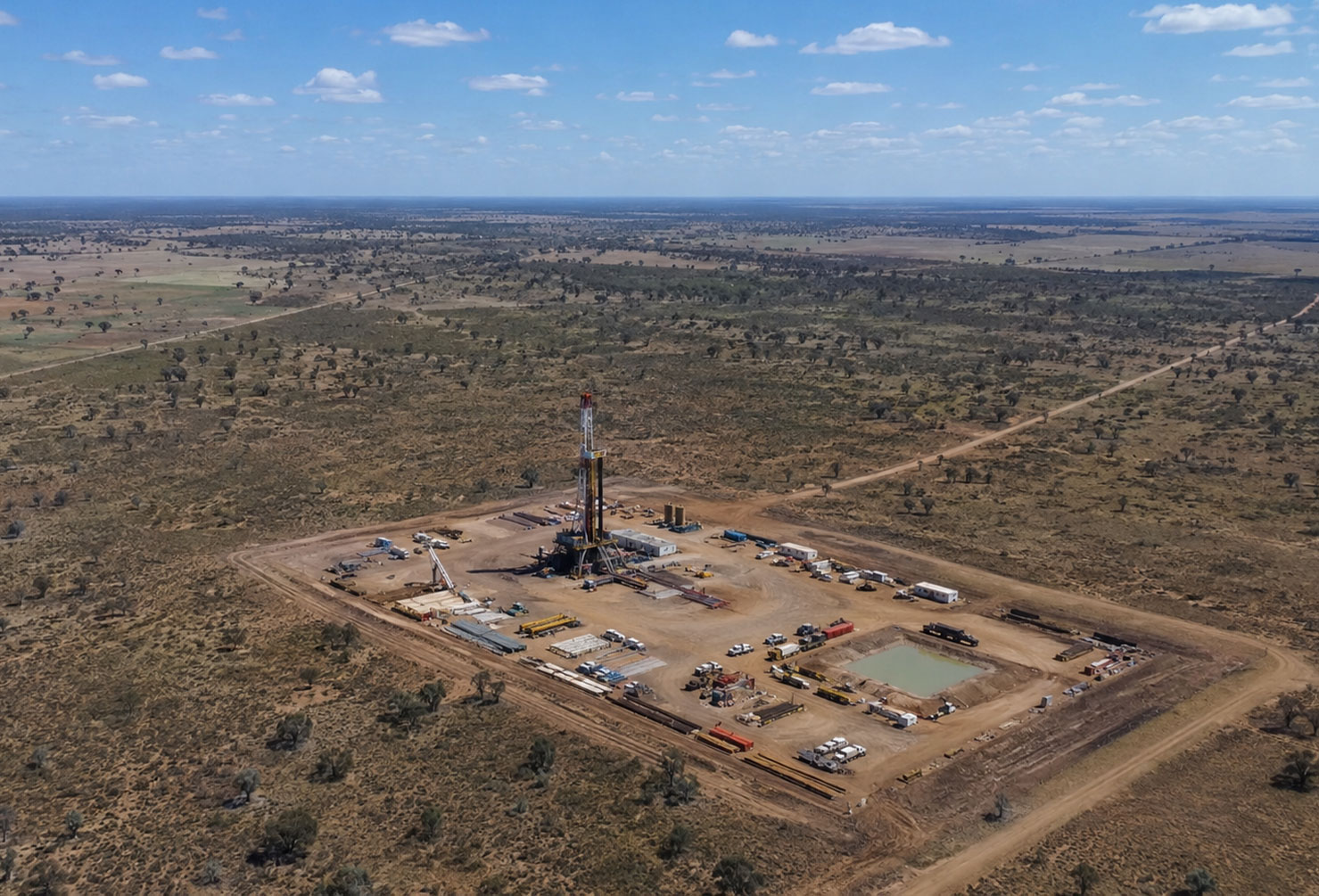
That picture is changing. In Queensland’s Taroom Trough, a 43,000-square-kilometre sedimentary basin between Chinchilla and Roma on the Western Downs, something significant is underway. Multiple operators are drilling simultaneously. The Queensland Government has committed budget funding. Gas is flowing from appraisal wells. And the workforce implications of this activity, while still in early stages, are real and present right now.
For workers with upstream onshore experience, and for operators thinking beyond WA’s construction cycle, the Taroom Trough is worth understanding now rather than after the rest of the market catches up.
What the Taroom Trough Actually Is
The Taroom Trough sits within the broader Bowen-Surat Basin, an established hydrocarbon province with a long history of production across Queensland. Unlike the unconventional coal seam gas fields that dominate the Surat Basin’s recent development history, the Taroom Trough is a conventional and unconventional oil and gas play targeting Permian sandstone reservoirs at significant depth, typically 3,000 to more than 4,000 metres below the surface.
The Queensland Government has described the Taroom Trough as potentially Australia’s first major new oil province since the 1970s. The geology is prospective for both gas and light condensate, with some operators holding independently certified contingent resources measured in the trillions of cubic feet. The basin’s proximity to existing east coast gas infrastructure is a significant commercial advantage over more remote upstream plays, including the Beetaloo Basin in the NT, which requires new pipeline construction to reach the market.
Exploration tenure holders across the basin have committed more than $500 million for exploration and appraisal programs. Activity at this scale, across multiple operators simultaneously, is not speculative interest. It is serious capital deployed against a credible resource.
Who Is Doing What Right Now
The Taroom Trough’s current activity involves four named operators running programs simultaneously, which is unusual for a basin at this stage of development.
Shell, through its subsidiary QGC, holds the largest single acreage position in the basin and has recently commenced what is described as the largest 3D seismic survey ever completed in Queensland. Shell is already producing approximately 200 barrels of liquid condensate per day from one of its appraisal wells, providing early production data that is informing the broader basin model. The scale of Shell’s seismic program signals that the company is moving from exploration toward development planning.
Elixir Energy, operating in a 50/50 joint venture with Santos in ATP2056, has delivered the most technically significant recent result. Its Lorelle-3H appraisal well, the first horizontal well drilled and tested outside Shell’s primary acreage on the upper western flank of the basin, achieved a record 1,157-metre lateral section within the primary Tinowon Dunk sandstone reservoir. The well intersected 148 metres of net gas-condensate pay across four material Permian reservoirs. Sustained gas flow was achieved during flowback operations from 29 June 2026, with formal production testing progressing. Elixir shares rose 13% on 6 July following the operational update, signalling how the market is reading these results.
Omega Oil and Gas, backed by the Flannery family and with a $60 million capital raise completed in April, has begun its own multi-well drilling campaign using a Helmerich and Payne FlexRig. Omega is targeting at least four wells across 2026 and 2027, with an initial resource and reserves estimate targeted for Q4 2026. The company was awarded a new 750-square-kilometre exploration block in February 2026, extending its operated position significantly.
Santos is a presence in the basin both through its JV with Elixir and through its own acreage. As the Lorelle appraisal phase completes, Santos is set to become the operator of the ATP2056 permit, indicating its intent to progress the asset toward development.
The Government Is Backing This with Real Money
The Queensland Government’s position on the Taroom Trough has moved from supportive to actively invested. The 2026-27 Budget, handed down on 23 June, committed $19 million to the state’s Fuel Security Plan. Of that, $11.9 million is allocated specifically to the development of a Taroom Trough Development Plan, a whole-of-basin framework designed to streamline approvals, coordinate infrastructure planning and accelerate development timelines.
This is planning and facilitation funding rather than drilling money, but its significance is not in the dollar amount. It is in what the funding signals: the Queensland Government is treating the Taroom Trough as a priority infrastructure project that requires coordinated government action to reach its potential, not a speculative exploration play that the market will sort out on its own.
The broader context is Queensland’s energy security challenge. The state is facing growing gas demand from industry and the electricity grid, declining production from legacy fields, and a genuine need for new domestic supply. The Taroom Trough’s proximity to existing pipeline infrastructure, and its potential to produce gas for domestic use under the conditions of the national gas reservation scheme, makes it one of the most commercially attractive upstream options in eastern Australia.
What This Means for the Workforce
The Taroom Trough’s current drilling activity is generating workforce demand that is active right now, not contingent on future investment decisions.
The drilling and appraisal phase, which is what the basin is in today, requires a specific set of roles that are already in demand across the four operating companies and their contractor communities. The most actively sought profiles include:
- Drilling engineers and well engineers with experience in deep onshore conventional and unconventional wells, specifically those familiar with Permian sandstone targets and horizontal well construction
- Rig crews across all disciplines: drillers, toolpushers, derrickmen, floorhands and mud engineers for the multiple concurrent drilling campaigns
- Completions engineers with hydraulic fracture stimulation experience, given that multi-stage fraccing programs are central to the production testing approach being used across the basin
- Wellsite geologists and petrophysicists for real-time formation evaluation during drilling and coring programs
- Seismic crews and geophysical support for Shell’s large-scale 3D survey program
- HSE advisors and compliance specialists with onshore Queensland regulatory experience
- Production testing specialists and flow assurance professionals as wells transition from drilling to test production
As the basin moves from appraisal toward development, additional workforce requirements will emerge. Pipeline engineers and construction trades will be needed as infrastructure connecting production to market is planned and built. Production operations staff for any early production facilities. Environmental and heritage compliance professionals for the ongoing approval processes that accompany development applications.
The geographic concentration of this activity, centred around the Western Downs region of Queensland with Roma and Chinchilla as the nearest service towns, means that logistics, accommodation and local content considerations are part of the workforce picture in a way that differs from FIFO-heavy offshore programs.
The Honest Assessment of the Timeline
The Taroom Trough is genuinely promising. The geology is credible, the operators are serious, and the government support is real. It is also worth being clear about what the basin is and is not today.
Commercial production from the Taroom Trough is not imminent. The current activity is appraisal and resource definition. Elixir is targeting its maiden 2P reserves booking as a result of the Lorelle-3H production test, which would be a significant milestone. Omega is targeting a resource and reserves estimate by Q4 2026. Shell’s seismic program will take time to process and interpret before it informs specific development decisions.
The pathway from current appraisal to commercial production involves further drilling, development approvals, infrastructure investment and market connection arrangements that will take years to work through. The Queensland Government’s own planning acknowledges that first production from new areas is not an overnight process.
What is happening right now, today, is appraisal drilling and production testing at a scale and quality that has not been seen in Queensland’s conventional gas sector for a generation. For workers with the right skills and operators looking for where Queensland’s upstream activity is concentrated, the Taroom Trough is the answer in mid-2026.