EnergyQuest’s September 2026 quarterly report opens with two investment aphorisms that frame its central finding better than any headline could. The first is attributed to Walter Wriston, former Citicorp CEO: capital goes where it is wanted and stays where it is well treated. The second is Warren Buffett’s: never lose money. Applied to Australian oil and gas in 2026, EnergyQuest CEO Rick Wilkinson’s conclusion is pointed: despite robust long-term demand forecasts for Australian gas at home and from LNG buyers across Asia, larger listed Australian oil and gas producers are increasingly directing new capital offshore.
The numbers behind that conclusion are stark. Australia’s national oil production more than halved in the June 2026 quarter compared with the same quarter in 2025, falling 53.6% year-on-year to a record low of 2.9 million barrels, one of the steepest quarterly falls in the history of the local oil industry. At the same time, Woodside has committed billions of dollars to developments in the US Gulf of Mexico, Senegal and Louisiana. Santos is investing in Alaska and Papua New Guinea.
For the Australian energy workforce, this trend creates both a risk and an opportunity that are worth examining carefully rather than reacting to as a simple headline.
What the EnergyQuest Data Actually Shows
It is important to be precise about what is and is not falling in Australia’s production figures, because the numbers are sometimes conflated in ways that obscure the real picture.
Australia’s total national petroleum production fell by around 5%, approximately 12.4 million barrels of oil equivalent, in the June 2026 quarter compared with the same quarter in 2025, reaching its lowest quarterly level since early 2022. The primary drivers of that overall decline were interruptions at the Pluto and Wheatstone LNG facilities in WA, which are operational issues rather than investment signals.
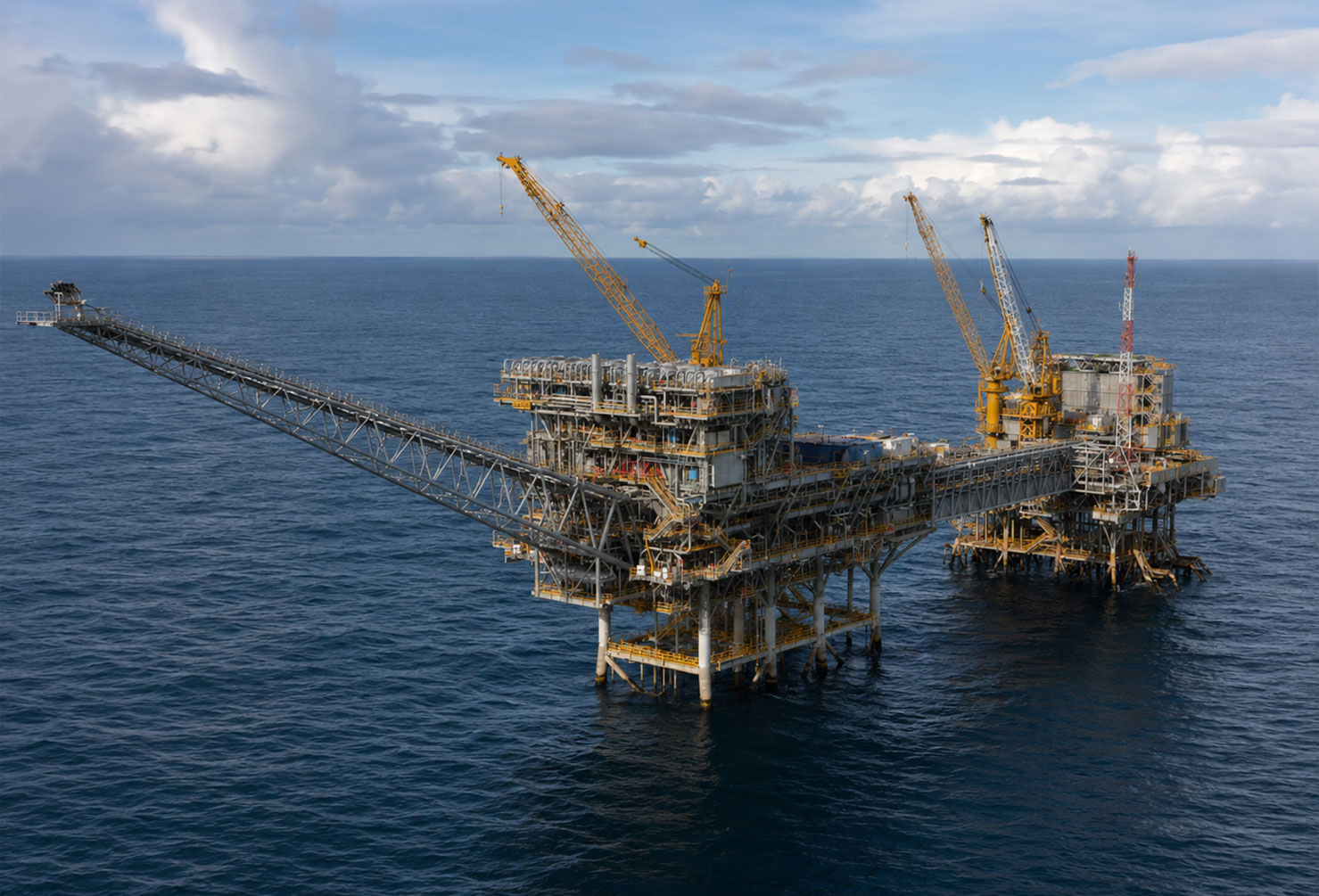
The oil production number tells a different and more concerning story. Australian domestic oil production specifically fell 53.6% year-on-year, dropping to a record low of 2.9 million barrels in the June 2026 quarter. This reflects a combination of factors: the natural decline of legacy oil fields including Van Gogh, closing oil production at Barrow Island and the progressive wind-down of Gippsland Basin JV oil projects that have been producing for decades. Without sufficient new development investment to replace depleting reserves, that decline was inevitable.
Rick Wilkinson’s commentary is direct about the broader implication: ‘You can’t talk seriously about fuel security while local oil production is falling off a cliff. Building more refineries without Australian oil to process is our field of dreams moment — build and they will find?’ The fuel security debate and the proposed pre-feasibility study for a potential new refinery at Oakajee or Kwinana assume a domestic oil supply base that is currently shrinking, not growing.
Why Major Operators Are Looking Offshore
The decision by Woodside and Santos to direct significant new capital to international projects is not irrational. It reflects a rational assessment of where the returns on capital are most attractive given the current Australian regulatory and policy environment.
Australia’s gas reservation scheme is now settled at a 20% reservation rate with a 1 July 2027 commencement, with export contracts signed before 22 December 2025 grandfathered. What remains unresolved is the detail of measurement, pricing and variation mechanisms — and that ongoing uncertainty in the scheme’s operational design makes project economics harder to underwrite with confidence for major long-lead investments. The grandfathering provision is significant: it means the near-term impact on existing projects is muted, but new projects face the full reservation obligation from the outset.
The debate about a windfall profits tax on gas producers, driven by a Greens-led Senate inquiry that held hearings through April 2026 and reported in May with Treasury asked to model levy options, has not resulted in legislation. But the fact that it remains an active policy discussion rather than a settled question adds another layer of uncertainty to the planning environment for major domestic gas investments.
Woodside’s investments in the US Gulf of Mexico, Senegal and Louisiana, and Santos’s positions in Alaska and Papua New Guinea, reflect the availability of large, high-quality resource positions in jurisdictions with established fiscal regimes and clear long-term frameworks. These are rational capital allocation decisions within a globally competitive investment environment. The implication for Australian domestic investment, however, is real.
What Has Actually Changed in the Domestic Pipeline
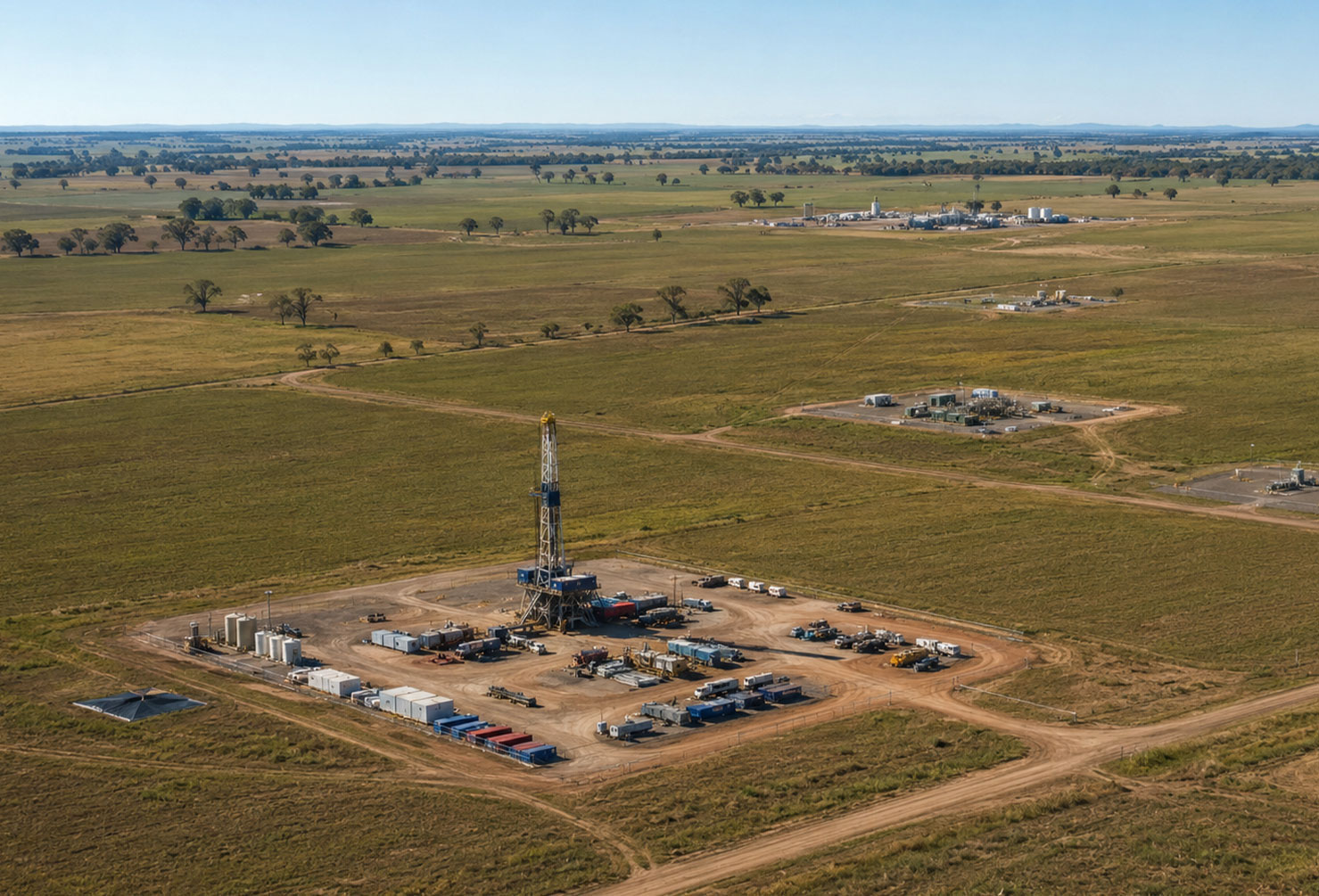
The more accurate and defensible observation about Australian domestic upstream in 2026 is not that the majors have been replaced by a different set of operators. Arrow Energy is a Shell and PetroChina joint venture, and the Yarrow development program in the Cooper Basin is Santos-operated. The real shift is in the character of domestic investment: from WA mega-projects anchored by the major listed producers to a broader spread of incremental brownfield development, appraisal drilling and infrastructure tie-back work across more Australian basins simultaneously.
The projects that are actively progressing domestically in September 2026 illustrate this:
- Arrow Energy’s Surat Gas Project in Queensland has three development phases active or recently announced simultaneously, delivering phased production additions to the east coast domestic market and QCLNG feedstock from the Western Downs region.
- Tamboran Resources has achieved initial gas sales from the Beetaloo Basin in the NT, with the Shenandoah South Pilot in commissioning and ramping toward the contracted 40 TJ/day by early 2027. Phase 1 expansion is in planning.
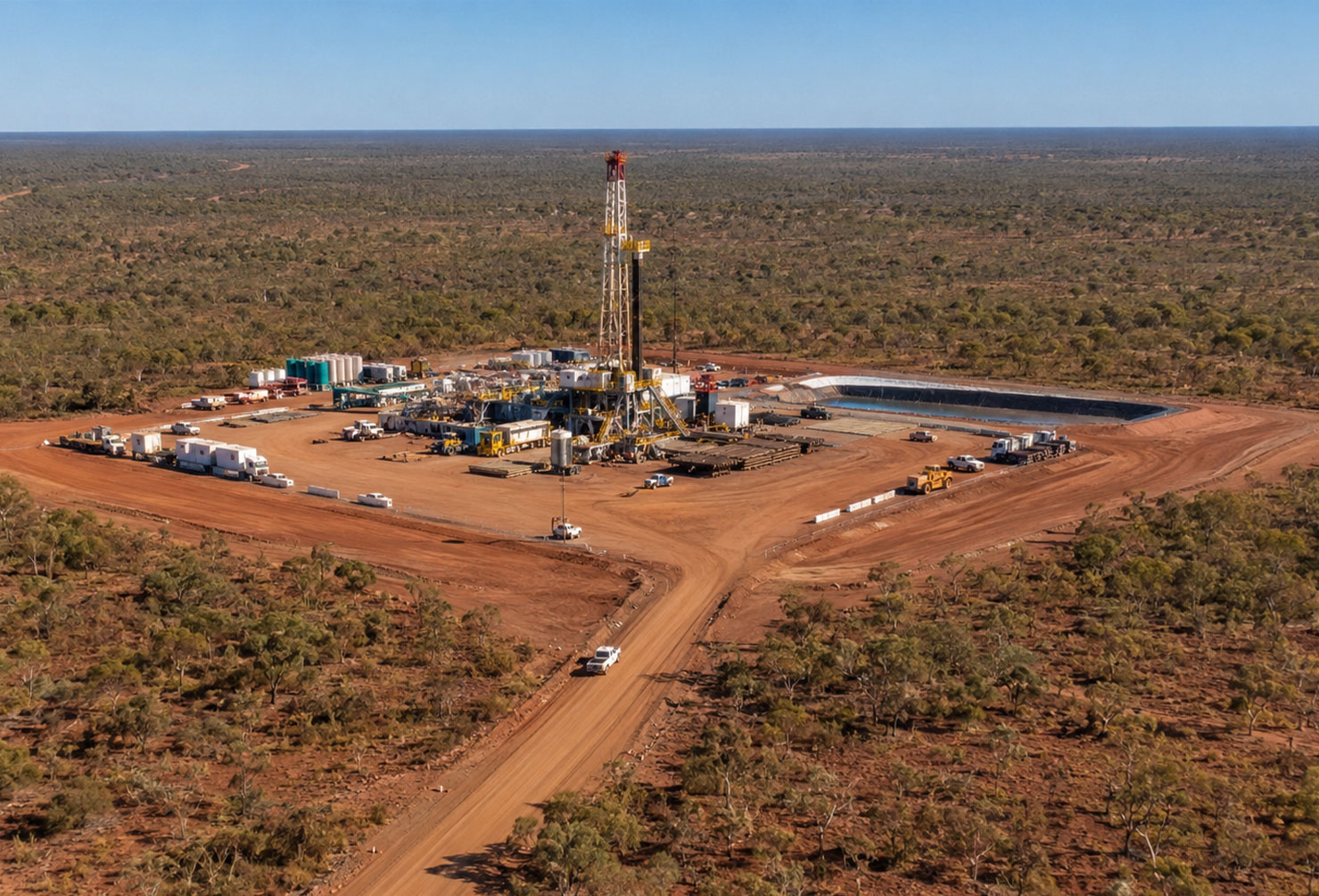
- Omega Oil and Gas is executing a multi-well appraisal program in Queensland’s Taroom Trough, with Canyon-3 exceeding pre-drill expectations and Canyon-4 currently drilling.
- Amplitude Energy is progressing the Annie gas field in Victoria’s Otway Basin toward 2028 first gas and has spudded the Juliet-1 exploration well as part of its broader East Coast Supply Project.
- Equus Energy has secured a foundation gas sales agreement with Alcoa and is moving to FEED for a Carnarvon Basin tie-back to existing North West Shelf infrastructure.
- Red Sky Energy, in a Santos-operated JV, is executing a three-well development program at the Yarrow gas field in South Australia’s Cooper Basin.
- Elixir Energy achieved a successful flow test at its Lorelle-3H well in the Taroom Trough, with further testing underway to characterise reservoir deliverability.
The exploration and appraisal spending that reached a 10-year high of A$471 million in the March 2026 quarter, a national total that includes both majors and smaller operators across all Australian basins, is forecast by Rystad Energy to exceed $1 billion for the full year. The geographic spread of that activity across Queensland, the NT, Victoria, WA and SA is broader than at any point in the previous decade.
The Workforce Implication of This Shift
For the Australian energy workforce, the change in the character of domestic investment matters more than the question of which companies are doing the investing.
During the WA LNG construction boom of the 2010s, the major operators absorbed the bulk of specialist engineering, project management and operational talent through large direct employment pools and long-term contractor relationships. The concentration of major capital projects in WA during that period shaped career trajectories, training pipelines and the geographic distribution of upstream expertise in Australia for a decade.
The current domestic pipeline is different in character. A specialist completions engineer with experience in tight unconventional reservoirs is in demand in both the NT Beetaloo shale program and the Taroom Trough’s stacked Permian tight reservoir appraisal. A subsea engineer familiar with NWS infrastructure tie-back concepts is relevant at Equus’s Carnarvon Basin project. A pipeline construction professional with remote NT experience is working on APA Group’s infrastructure programs. A Cooper Basin frac specialist is needed at the Yarrow program. An Otway Basin drilling crew is offshore with Amplitude’s Juliet-1.
This geographic and technical diversity creates a more varied demand base for upstream skills than the WA LNG construction cycle ever did. Workers with Australian basin experience across Queensland, the NT, Victoria and SA are operating in a market where the demand for their specific knowledge is spread more broadly and is less cyclically concentrated than at any point in recent history.
The Policy Context and What Changes It
EnergyQuest’s concern about capital allocation and domestic investment is real, and it is shared by Australian Energy Producers and others. The question is what, if anything, changes the calculus for major operators weighing domestic versus offshore investment decisions.
The domestic gas reservation scheme, the fuel security policy debate and the pre-feasibility studies for potential new refinery capacity all reflect government awareness that Australian domestic investment needs a more supportive framework. The federal government’s acreage releases in the Otway and Gippsland basins, and the Victorian government’s simultaneous release of petroleum exploration permits, are practical steps to open new domestic prospectivity. But acreage releases take years to translate into production, and the detail of the reservation scheme’s measurement and pricing mechanisms is still to be resolved.
For the workforce, the policy environment matters less than the capital that is actually being deployed. In Australia in September 2026, that capital is being deployed — not primarily in new domestic mega-projects by the major listed producers, but across a broader range of basins, project types and operator profiles than the conventional analysis of capital flight would suggest. The workforce that understands those basins, those project types and those operators is better positioned than the headline numbers alone might indicate.