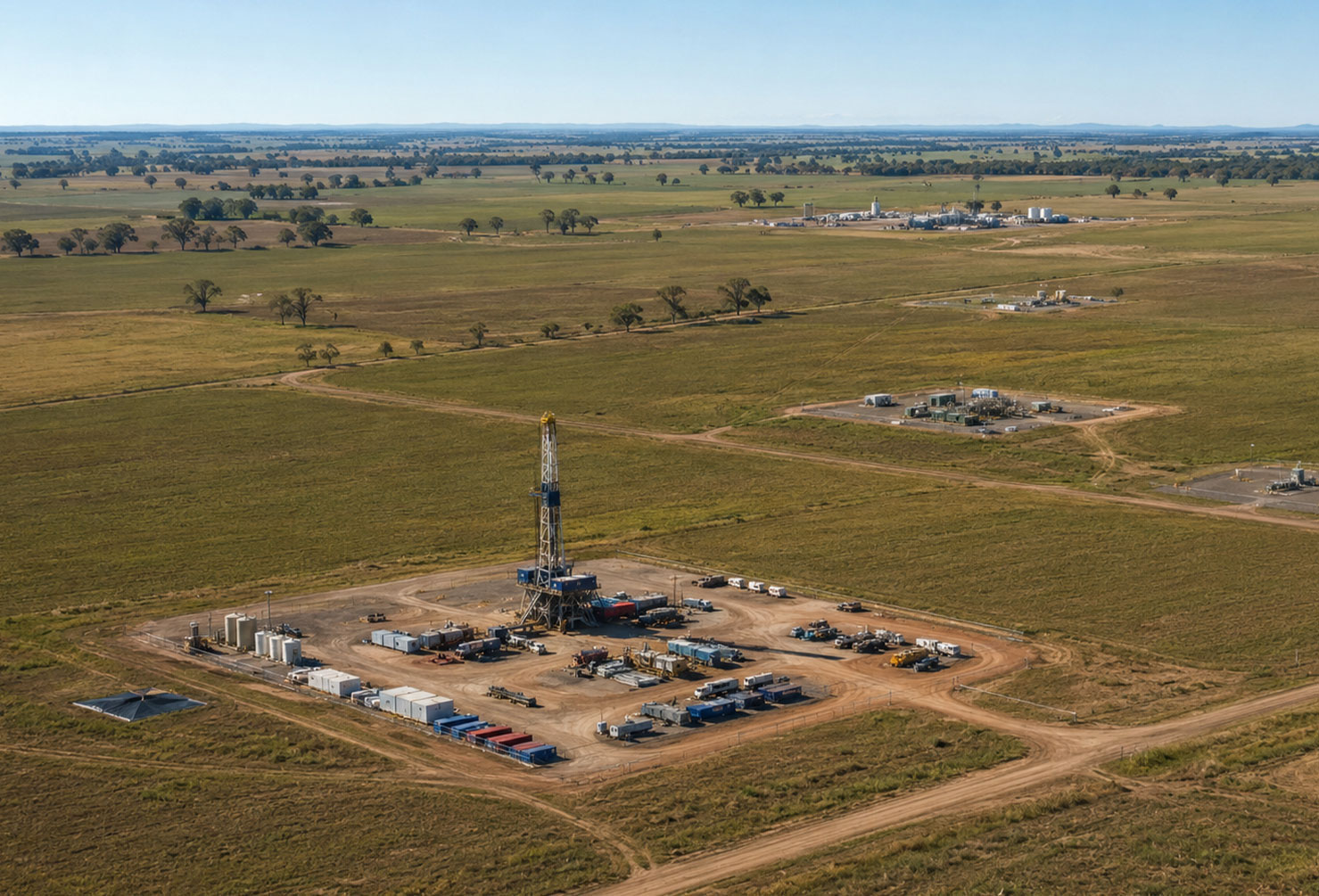
On 5 August 2026, Shell confirmed it will invest in the next phase of Arrow Energy’s Surat Gas Project in Queensland. The new phase, known as Surat Gas Project Central, involves 143 backfill wells across the Surat Basin approximately 160 kilometres west of Brisbane, a field compression station and associated pipeline and road infrastructure. Peak production of approximately 79 million standard cubic feet per day is targeted from 2028. The investment is expected to be less than $500 million.
Arrow Energy is a 50/50 incorporated joint venture between Shell and PetroChina, established in 2010. Gas from Surat Gas Project Central will supply the Australian domestic market and the QCLNG export terminal on Curtis Island near Gladstone, under an existing 27-year gas sales agreement. Shell Australia’s Country Chair Cecile Wake was direct about the rationale: investing in gas development is critical to domestic energy security, meeting export contracts, and supporting employment and economic activity in regional Queensland.
The significance of this investment is not just in its scale. It is in what it signals about how major international operators are reading the Australian upstream environment in mid-2026, and what that means for the workforce that delivers these programs.
What the Surat Gas Project Actually Is
The Surat Gas Project is one of the largest coal seam gas development programs in Australia. Arrow Energy’s long-term development plan covers up to 2,500 wells across the Surat Basin over the 27-year life of the gas sales agreement, targeting approximately five trillion cubic feet of total gas production. The project covers an area from Wandoan in the north to south-west of Millmerran, spanning seven production licences across Queensland’s Western Downs region.
The project has developed in successive phases since Arrow Energy’s formation. Phase 1, which included more than 600 wells and received approval in April 2020, established the core production base with inlet processing facilities feeding into Shell-QGC operated infrastructure. Phase 2, known as Surat Gas Project North and covering the area northeast of Miles, was sanctioned in 2024 with construction progressing through 2025 and 2026. Surat Gas Project Central is the third discrete phase, targeting the central area of Arrow’s tenure between the two earlier development areas.
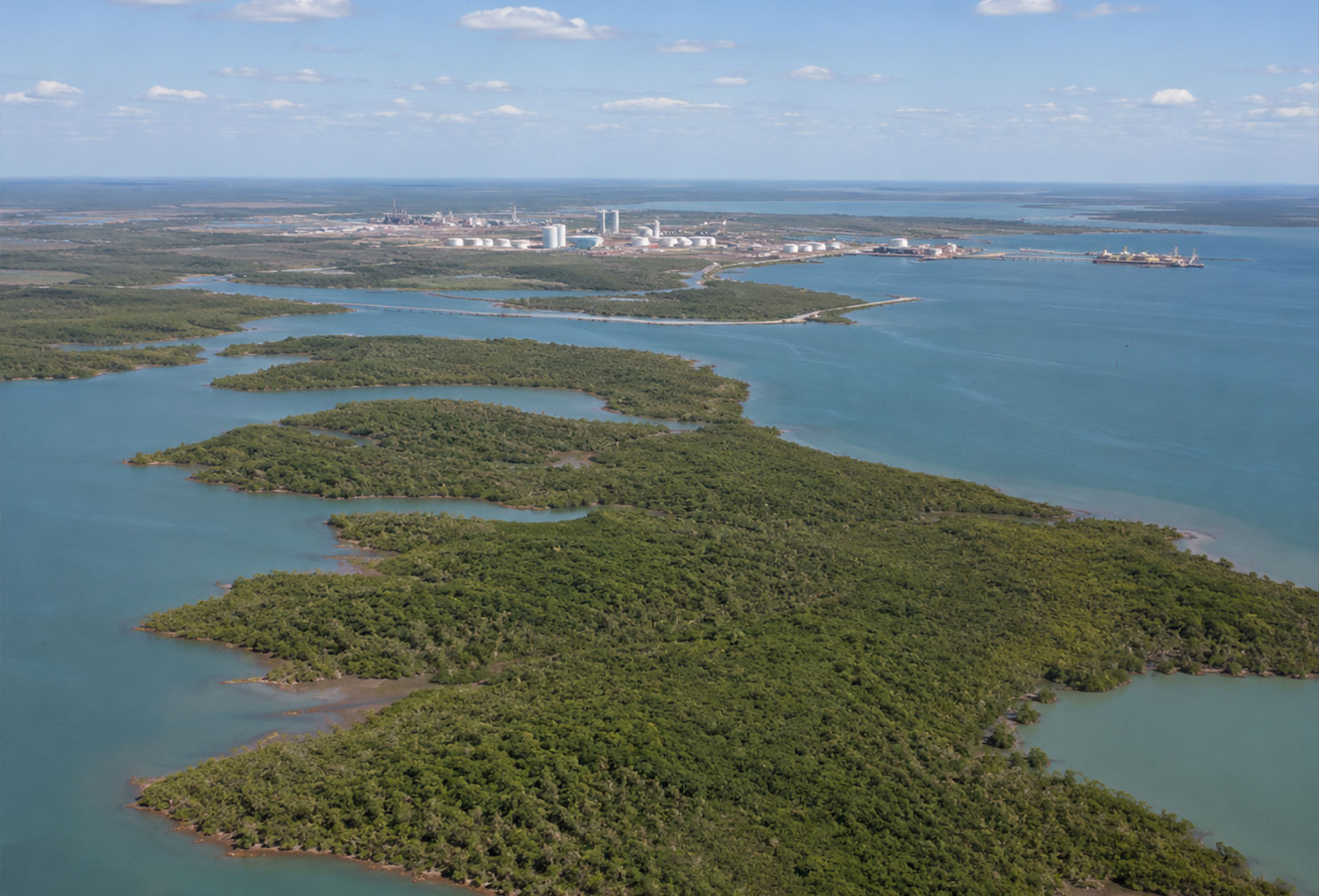
QCLNG, the export terminal that takes Arrow’s gas for LNG processing, is one of Australia’s three major east coast LNG export facilities. Shell operates QCLNG with a 73.75% stake, alongside CNOOC (25%) and MidOcean Energy (1.25%). In 2023, QCLNG supplied 15% of gas demand on Australia’s east coast, a substantial contribution to both domestic and export supply from a single project.
Why Shell Is Investing Now
The timing of the Surat Gas Project Central sanction is not coincidental. Shell’s investment decision comes against the backdrop of a global LNG market that has been materially disrupted by the Iran conflict and associated Hormuz restrictions since early 2026. Asian spot LNG prices have risen sharply. Asian buyers are actively diversifying supply away from Gulf exposure. Australian LNG, produced from politically stable assets with long-term supply agreements and established shipping routes, has become more strategically attractive to buyers, not less.
Shell’s own LNG Outlook maintains a long-term growth trajectory for LNG demand despite the near-term cyclical disruption. The investment in Surat Gas Project Central is consistent with that view, a commitment to sustaining feedstock supply for QCLNG’s long-term contracted volumes rather than managing the asset in decline mode.
The domestic policy environment has also shifted. The federal gas reservation scheme, which will require LNG exporters to demonstrate domestic supply commitment from July 2027, creates an additional incentive for operators like Arrow to develop gas that can serve both domestic customers and export contracts simultaneously. Surat Gas Project Central does exactly that, its output will be split between the domestic market and QCLNG.
Shell Australia’s country chair Cecile Wake, who chairs the Australian Energy Producers industry body, is well positioned to speak to the investment’s policy context. Her public framing of the decision around domestic energy security alongside commercial returns reflects the dual rationale that the current policy environment rewards.
The Workforce That a CSG Program at This Scale Requires
Coal seam gas development is a volume-intensive business. Unlike a single large offshore facility that concentrates workforce demand in a defined location for a defined period, a CSG program involving 143 wells spread across a large tenure area generates sustained, distributed workforce demand across the full development lifecycle.
The well construction phase is the largest single workforce driver. Drilling 143 wells requires:
- Drilling rig crews across all disciplines: drillers, offsiders, derrickmen and mud engineers. CSG wells are typically shallower and faster to drill than conventional oil and gas wells, which means rig cycles are short and crew numbers are sustained over a longer calendar period rather than concentrated at a peak.
- Completions engineers and crews for the hydraulic fracture stimulation programs that unlock gas flow from coal seams. CSG completions are technically distinct from conventional well completions and require specific basin experience.
- Wellsite geologists and production engineers for real-time monitoring and formation evaluation during drilling and early production.
- Civil construction crews for the access roads, wellpads, water and brine infrastructure that CSG development requires across large areas of agricultural land.
The surface facilities and compression phase adds a second workforce stream running parallel to well construction:
- Mechanical, electrical and instrumentation trades for the field compression station and associated processing infrastructure.
- Pipeline construction crews for the gathering network that connects individual wells to the compression station and then to the QCLNG infrastructure.
- Environmental and cultural heritage specialists for the ongoing compliance requirements across Arrow’s Western Downs tenure.
- Landowner and community liaison professionals, a significant and specialised workforce requirement for any CSG program operating across privately held agricultural land.
The operational phase from 2028 adds a long-duration demand for production technicians, compression operators, water management specialists and maintenance personnel. Arrow Energy’s total workforce, including the Surat Gas Project and its legacy production operations, is expected to reach and sustain approximately 1,000 jobs across the life of the project. A meaningful proportion of those are based in the Western Downs region, with Arrow actively prioritising local employment in its community investment framework.
What This Means for the East Coast Gas Picture
The Surat Gas Project Central announcement is the third significant east coast upstream investment commitment in as many weeks. Tamboran Resources is weeks away from first gas sales from the Beetaloo Basin. Amplitude Energy has approved the Annie gas field development in the Otway Basin. And now Shell has sanctioned a new phase of Queensland CSG. The cumulative effect of these decisions is a meaningful improvement in Australia’s east coast gas supply outlook for the 2028 to 2030 window that AEMO has consistently identified as the period of greatest supply risk.
The connection between these investments and the east coast gas supply debate is more direct than it might appear. Surat Gas Project Central gas is explicitly described as supplying domestic customers alongside its QCLNG export commitment. The project’s location, its established connection to existing QCLNG infrastructure and its 27-year supply horizon all contribute to the domestic market picture that the gas reservation scheme is designed to improve.
For operators and employers in Queensland’s upstream sector, the Shell investment reinforces the Western Downs as the most active onshore gas development region in Australia. The Taroom Trough, with Elixir, Omega, Shell and Santos all running active programs, and the Arrow Surat Gas Project, with its established 15-year operating presence and multi-decade development horizon, make the Western Downs a genuine long-term career destination for upstream professionals rather than a single-project opportunity.
The Practical Takeaway for the Workforce
For workers with CSG experience, whether from Queensland’s established Surat and Bowen Basin operations, from unconventional programs in the NT or SA, or from international CSG and shale programs, the Surat Gas Project Central announcement confirms that Queensland’s CSG sector is in an active development phase rather than a maintenance phase. The 143-well program running through to 2028 first gas represents sustained demand for the specific skills that CSG development requires.
For operators and project organisations planning their workforce strategies for 2027 and 2028 programs, the Shell announcement adds another layer of competition for the same specialist pool that Beetaloo, Taroom Trough and the broader east coast exploration surge are already drawing on. CSG-specific completions engineers, compression trades and landowner engagement professionals are not interchangeable with generic oil and gas skills. The lead times for sourcing and verifying these profiles are long, and the window to act on 2028 programs is right now.
The investment signals a broader point worth noting. When a major international operator like Shell commits capital to a new upstream program in Australia in August 2026, against the backdrop of policy uncertainty, a new reservation scheme and an active debate about windfall taxes, it is making a statement about the long-term commercial case for Australian upstream gas that goes beyond any single project. The workforce that delivers these programs is at the centre of that case.