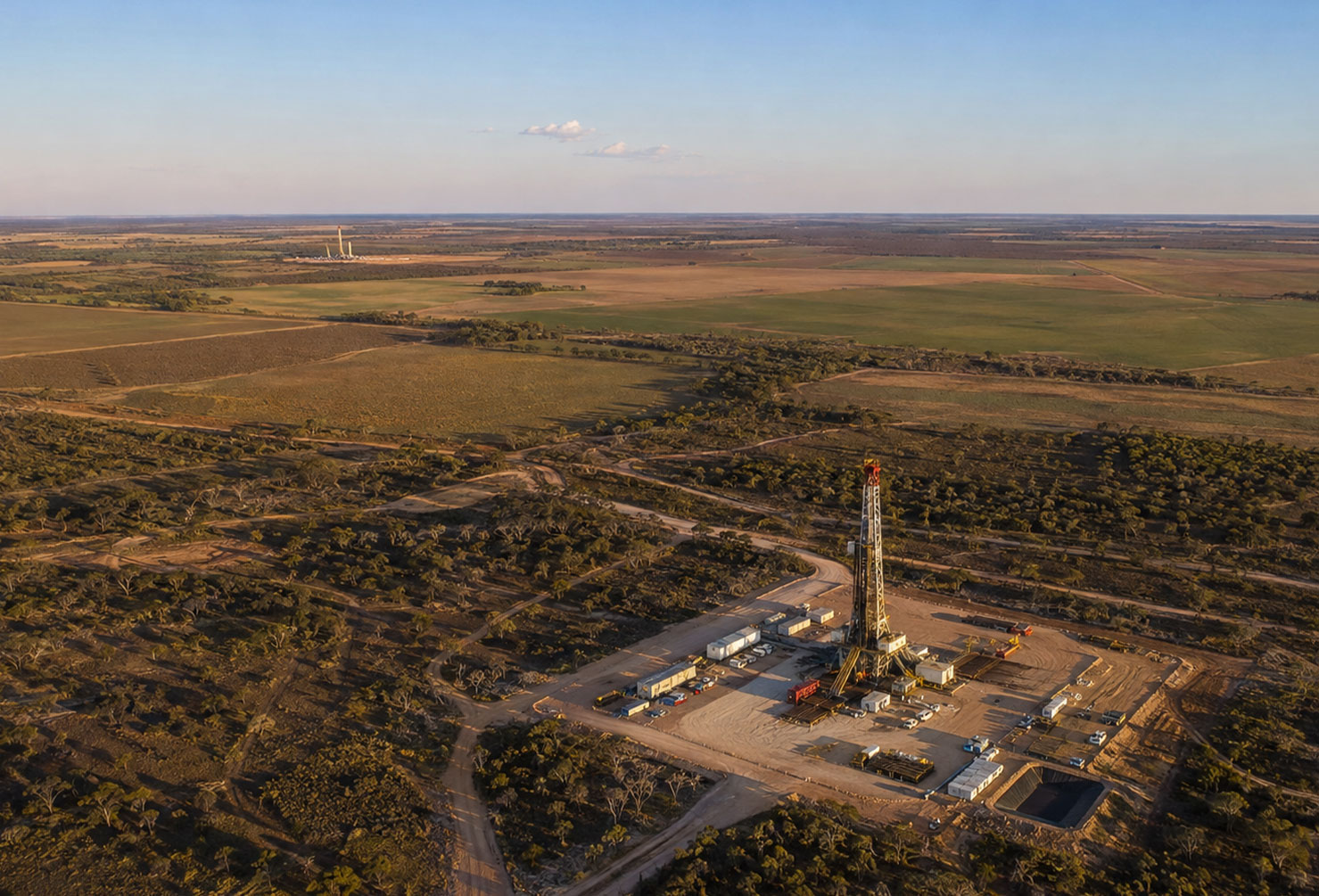
Australia’s Dorado oil discovery has spent several years accumulating a reputation as a project that is always almost ready. Discovered in 2018 in the Bedout sub-basin approximately 150 kilometres north of Port Hedland, Dorado contains gross 2C contingent resources of 344 million barrels of oil equivalent, making it Australia’s largest undeveloped oil project. Its development has been deferred, reassessed, re-scoped and deferred again. The FID dates have come and gone.
In mid-2026, something has changed. The Carnarvon Energy CEO Philip Huizenga told Bloomberg in June that a final investment decision could be made in late 2027. Santos, the 80% operator, has characterised Dorado as a high-return, short payback-cycle project with the potential to enhance energy security. Santos has indicated the Bedout Basin will be appraised for scale with three wells in 2027, including the Equinox prospect, with the Bedout-2 well campaign locked in for April 2027. The language coming from both the operator and the non-operating partners is more definitive than it has been at any point in Dorado’s history.
For the workforce, the relevant question is not whether a late 2027 FID is certain — it is not — but what a project moving in this direction means for the people and organisations that need to be positioned to support it.
What Dorado and the Bedout Basin Actually Are
Dorado is the anchor discovery in the Bedout sub-basin, a frontier basin that has attracted significant exploration interest since the initial 2018 discovery demonstrated a working petroleum system in a previously untested part of offshore Western Australia. The field is located in water depths of approximately 90 metres, placing it within the technically and economically accessible range for conventional FPSO development.
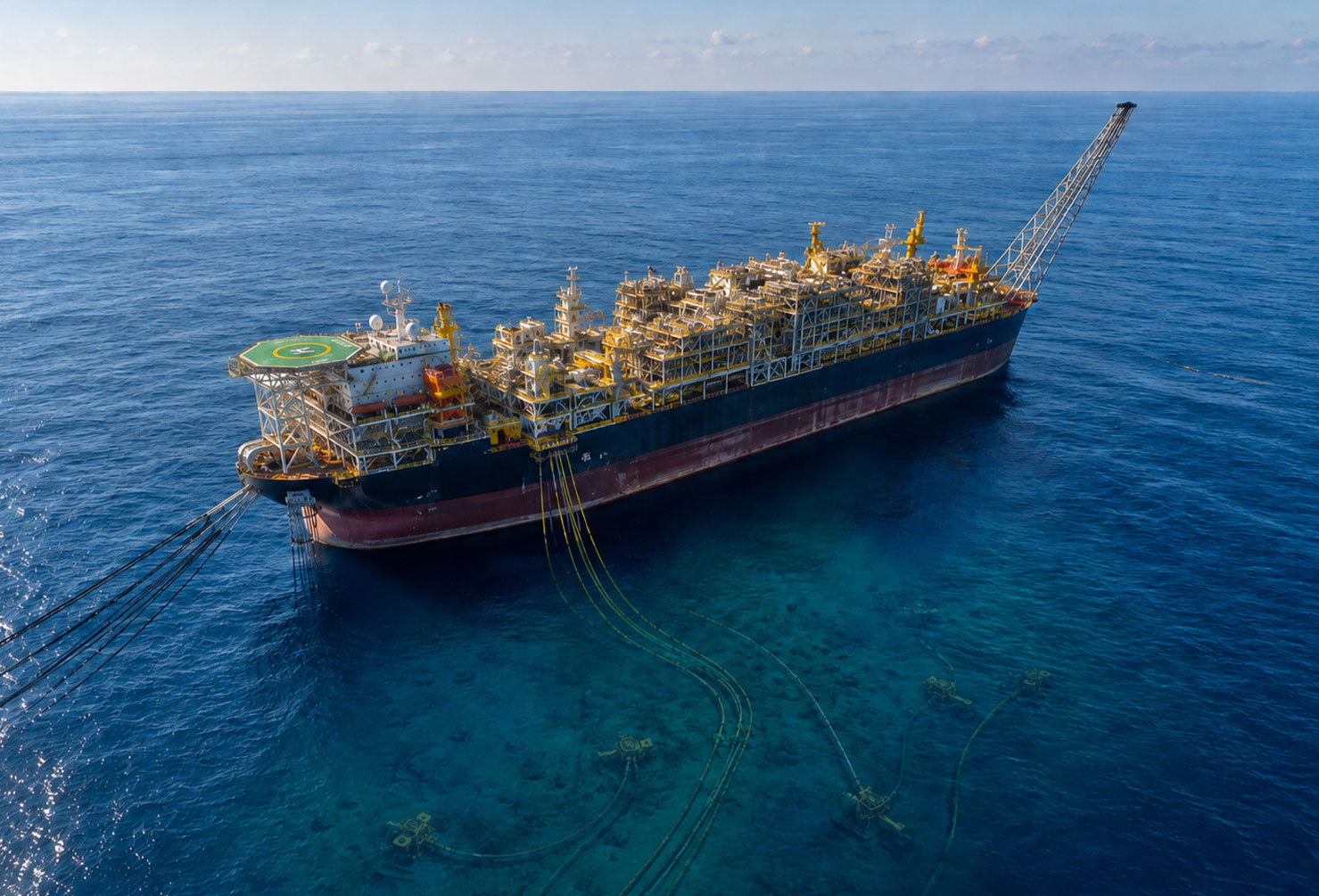
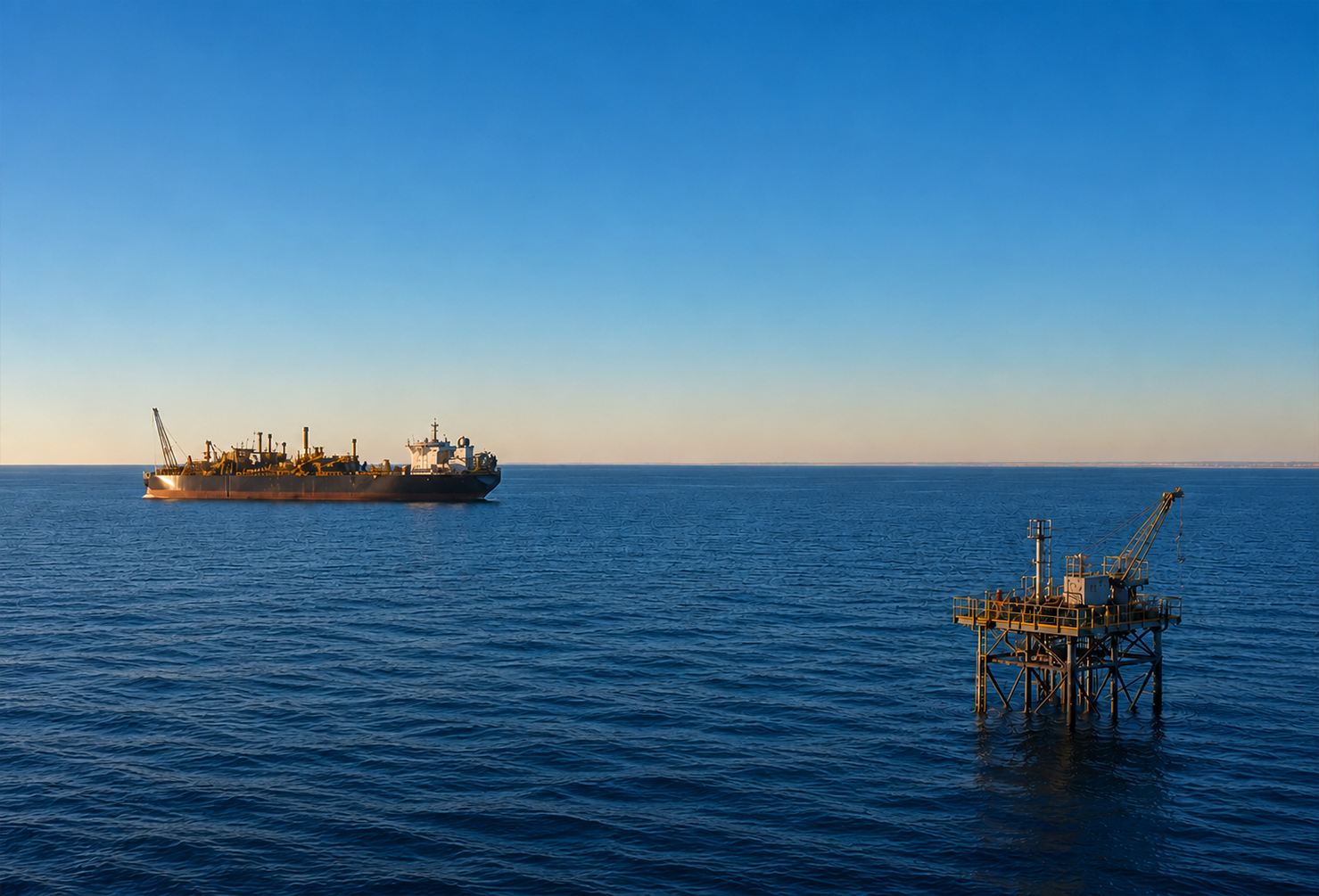
The planned development structure has two phases. Phase 1 focuses on oil and condensate production through a wellhead platform and floating production, storage and offloading vessel. Santos has described initial production rates of 27 to 36 million barrels per year in Phase 1, with gas reinjected to optimise liquids recovery. Phase 2 would develop the significant gas resources in the Bedout Basin and provide future backfill supply to Santos’ domestic gas infrastructure in Western Australia.
Pavo is the second major discovery in the basin, adding resource scale beyond the Dorado anchor and providing the basis for the tieback and scale appraisal work that Santos has flagged for 2027. The Bedout Basin’s prospectivity extends well beyond Dorado and Pavo as standalone developments, and Santos’ decision to appraise for scale with three wells in 2027 reflects that broader ambition.
The joint venture structure is straightforward: Santos holds 80% and is the operator. Carnarvon Energy holds 10%. Taiwan’s CPC, through its subsidiary OPIC Australia, holds the remaining 10%. Carnarvon and CPC are active and supportive partners in the joint venture.
Why This Project Is Back in Serious Conversation
The energy security context has fundamentally changed the investment case for Dorado. Australia relies on imported fuel for the vast majority of its transportation needs. The country has permanently closed five of its seven refineries since 2013. Forward fuel cover has been running at historically low levels through mid-2026, with the fuel security situation attracting weekly Prime Ministerial updates and IEA warnings.
In this context, a domestic oil development project producing 27 to 36 million barrels per year from Australian offshore infrastructure looks very different from how it looked when the primary investment calculus was oil price and capital returns alone. Santos’ own framing has shifted to reflect this. Characterising Dorado as a project with the potential to enhance energy security is not incidental language. It is a deliberate repositioning of the project’s value proposition in a policy environment that is now actively supportive of domestic upstream development.
Carnarvon’s quarterly report released on 28 July 2026 revealed a 92% increase in the joint venture’s prospective resource inventory following completion of the Bedout 3D Seismic MegaMerge project. The basin now carries gross prospective resources of 6,256 million barrels of oil equivalent across 130 prospects, up from 3,263 million barrels a year earlier. The four prospects shortlisted for the 2027 drilling campaign, Ara, Yuma, Hutton and Goats Eye, contain approximately 851 million barrels of prospective resources between them. Santos’ decision to appraise for scale with three wells in 2027, the Equinox campaign, Bedout-2 and the Pavo appraisal work, reflects a view that the basin’s resource potential is substantially larger than Dorado and Pavo alone, and the MegaMerge results have now put a number on that potential. A basin appraisal result from the 2027 campaign that adds further confirmation to those resource estimates changes the economics of development infrastructure in ways that make a Phase 1 FID more attractive.
Carnarvon’s Perspective on the Project
Understanding Dorado’s development trajectory requires understanding the position of Carnarvon Energy as a 10% partner in the joint venture. Carnarvon Energy is an ASX-listed explorer with a genuine and long-held belief in the Bedout Basin’s potential. Philip Huizenga’s public comments have been consistently enthusiastic about both Dorado and Pavo, and about what a development would mean for Australia’s oil self-sufficiency. As a 10% partner, Carnarvon participates fully in JV discussions while Santos, as the 80% operator, drives the development timeline.
This structure means that Carnarvon’s publicly stated timeline, a late 2027 FID, reflects its genuine belief in what is possible, informed by its participation in JV discussions, but not its unilateral determination. Santos has been more measured in its public communications, focusing on the 2027 appraisal program as the next concrete milestone rather than committing to a specific FID date.
The practical implication for anyone tracking Dorado as a workforce opportunity is to weight Santos’ stated milestones, the 2027 appraisal program, the Equinox well, the Bedout-2 campaign, more heavily than the FID timing speculation, while acknowledging that Carnarvon’s confidence reflects genuine JV-level discussions rather than speculation.
What Pre-FID Activity Looks Like Right Now
Whether or not Dorado reaches FID in late 2027, the activity required to get it there is generating real and specific workforce demand starting now.
The 2027 Bedout Basin appraisal program requires drilling engineers and well engineers with offshore Western Australia experience, deepwater appraisal well design capability and familiarity with the Bedout sub-basin’s geology. This is a small and specialised candidate population. Carnarvon’s quarterly report released on 28 July 2026 confirmed that the Transocean Equinox semi-submersible has been contracted for the 2027 drilling campaign, selected after a comprehensive bid evaluation process that commenced in early 2025. The rig is currently engaged in a multi-well exploration drilling campaign off the coast of Victoria, and is expected to be available for the Bedout campaign from April 2027.
FEED preparation, which typically begins 18 to 24 months before a FID, requires project engineers, naval architects, subsea engineers, FPSO specialists and cost estimators with major offshore development experience. If a late 2027 FID is the target, FEED preparation needs to be well advanced by mid-2026. That work is ongoing.
Environmental and regulatory work is a continuous requirement for a project of Dorado’s scale. Environment plans, heritage assessments, stakeholder engagement and NOPSEMA submissions all require specialist professionals who understand the regulatory framework for major offshore developments in Commonwealth waters. Dorado already has NOPSEMA approval for its offshore project proposal, but ongoing regulatory maintenance and the preparation of more detailed environmental documentation for development activities requires sustained specialist input.
Santos has also flagged exploration and appraisal activity across a broader suite of WA oil assets beyond the Bedout Basin. This creates additional demand for the exploration-phase workforce profiles, geoscientists, petrophysicists, drilling engineers, at a time when those profiles are already under pressure across the Australian market.
The Construction and Operations Workforce Picture
If Dorado proceeds to FID in late 2027 and construction commences in 2028, the workforce requirements at construction phase would be among the most significant in Australian offshore development since Barossa and Scarborough.
The FPSO construction and commissioning phase for a project of Dorado’s scale would typically be executed offshore in a major Asian shipyard before the vessel is mobilised to the Bedout sub-basin. The WA-based workforce during construction would be concentrated in project management, engineering oversight, procurement and logistics rather than in the large trades-heavy workforce characteristic of an onshore LNG construction program.
The wellhead platform installation and subsea infrastructure work would require specialist marine contractors, installation vessel crews, subsea engineers and offshore construction management professionals. These are specialist populations with their own supply constraints in a market where multiple Australian offshore projects are simultaneously progressing.
Steady-state operations from the FPSO would require a lean but highly skilled operational team. Offshore operations on an FPSO are characterised by rotating rosters, highly automated process systems, a strong emphasis on HSE management in an isolated offshore environment, and the kind of technical depth across mechanical, electrical, instrumentation and process disciplines that smaller operational teams require each member to possess. The 350-person operational workforce estimate that has been used for planning purposes represents a high-value, high-skill employment outcome rather than a large-volume one.
The Honest Timeline
Late 2027 FID is a target, not a commitment. Santos has not publicly committed to that date, and three appraisal wells in 2027 still stand between the current position and a development decision. Appraisal results that do not meet expectations, a deterioration in the oil price environment, regulatory complications or capital allocation shifts within Santos could all affect the timeline.
What is different now from previous periods when Dorado appeared close is the convergence of energy security urgency, improving basin understanding, and a more supportive domestic investment environment. The project has come, in Philip Huizenga’s words, right back to the top of Santos’ thinking. Whether that translates into a 2027 FID or a later one, the direction of travel is clearer than it has been since the project was discovered.
For workers and operators considering how to position for Dorado, the practical starting point is engagement with the pre-FID activity that is real today, the 2027 appraisal program, the FEED preparation work, the environmental and regulatory pipeline, rather than waiting for a FID announcement that may or may not arrive on schedule. The projects that execute well after FID are consistently the ones whose workforce planning started well before it.