
Most conversations about job opportunities in oil and gas focus on the big visible plays: Scarborough, Barossa, North West Shelf, Beetaloo. These are the projects that make headlines, drive recruitment campaigns and dominate workforce planning discussions. They are also the projects that most workers are already aware of and competing for.
Shutdown and turnaround work is different. It does not attract the same public attention. It is rarely discussed in industry news, and it does not feature prominently in most career advice for people entering or re-entering the sector. But it is one of the most consistent and significant sources of employment in Australian oil and gas, and for workers with the right technical skills and the flexibility to mobilise on relatively short notice, it is a market worth understanding.
What Shutdowns and Turnarounds Actually Are
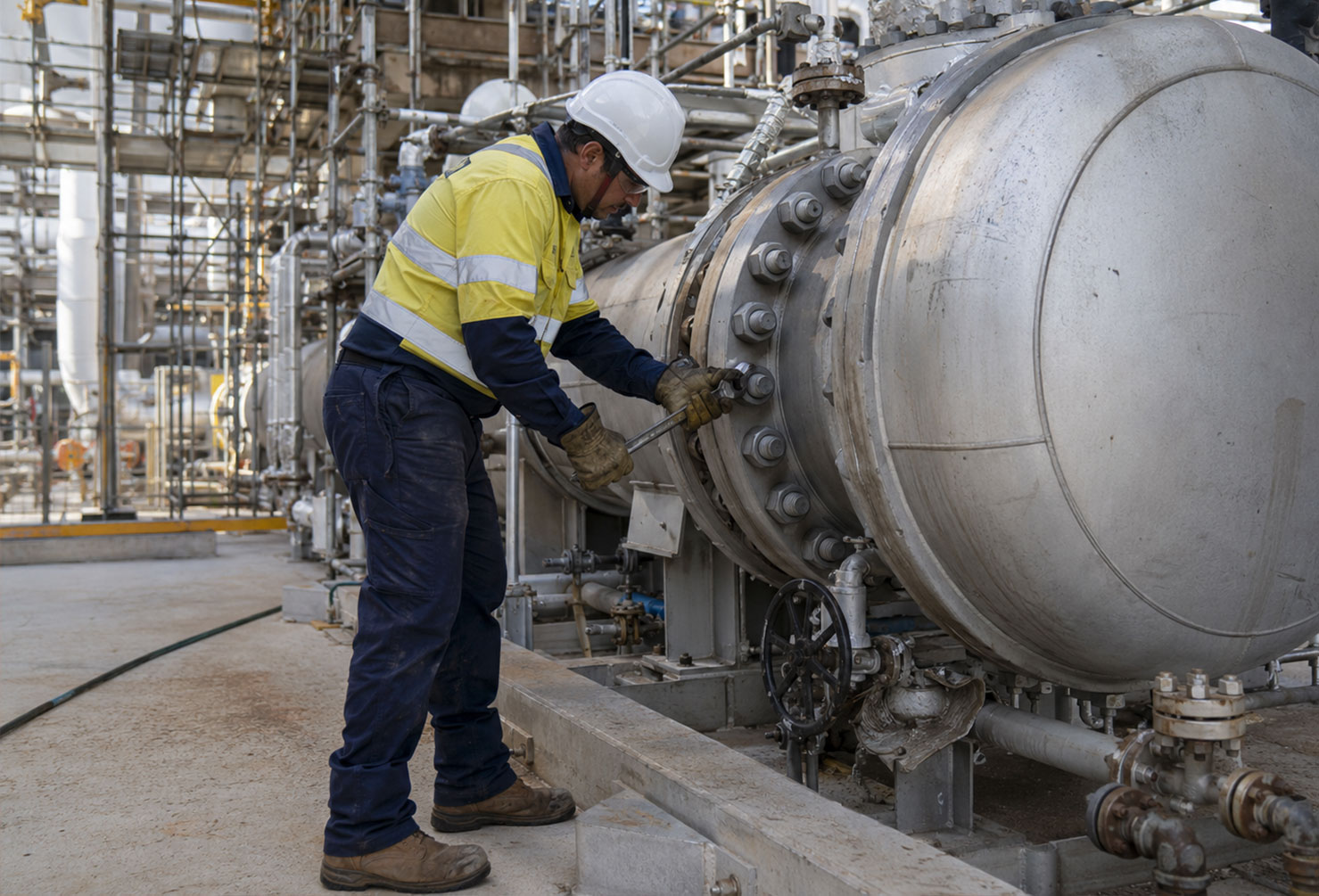
Every major oil and gas facility, whether an offshore platform, an LNG processing train, an FPSO or an onshore gas plant, requires periodic planned maintenance that cannot be carried out while the facility is in full operation. That maintenance is a shutdown, sometimes called a turnaround or a planned maintenance outage.
The scope of work in a shutdown varies by facility and by cycle, but typically includes inspection and integrity assessment of pressure vessels and piping systems, replacement of worn or degraded components, maintenance and overhaul of rotating equipment such as compressors, pumps and turbines, electrical and instrumentation system checks and calibrations, and any modifications or upgrades that cannot be done during normal operations.
Because this work has to be completed in a defined window, with the facility returning to production on a fixed date, shutdowns are intensely labour-intensive. A facility that normally operates with a workforce of a few hundred may bring in several hundred additional specialist contractors for the duration of a shutdown. The workforce profile is almost entirely technical, the work is demanding and the rates reflect that.
Why Shutdown Work Is Its Own Job Market
Shutdown and turnaround work operates differently from project construction and from steady-state operations employment, and understanding those differences matters for workers considering it as a significant part of their career.
The timeline is compressed and fixed. Unlike a construction project that may stretch over years, a shutdown has a defined start and end date, often measured in weeks. The pressure to complete within that window is significant, and the workforce management required to keep hundreds of contractors productive and safe in a confined, complex operating environment is considerable.
The technical bar is high. Shutdown contractors are expected to be productive from day one. There is no extended onboarding period. If you are engaged as an instrument technician for a compressor overhaul, the expectation is that you know what you are doing before you arrive on site. Pre-screening and reference verification are therefore more important in this market than in almost any other context.
Availability and mobility are critical. Shutdowns are scheduled, sometimes years in advance, but the specific workforce is often assembled relatively close to the execution date. Workers who have made themselves known to specialist placement partners, who have current certifications and confirmed availability, and who can mobilise within days when needed, are the ones who build a consistent shutdown career.
Which Roles Are Most in Demand
The trades and specialist roles that appear most consistently across Australian shutdowns include:
- Mechanical fitters, particularly those with experience on rotating equipment and pressure systems
- Boilermakers and welders with pressure vessel coding, ASME IX certification is highly valued
- Instrument technicians with calibration experience and familiarity with specific vendor systems
- Electrical technicians, particularly those with EEHA qualifications for hazardous area work
- Scaffolders and riggers, every shutdown requires significant access and lift work
- Supervisors and leading hands with shutdown management experience across multiple facilities
- HSE advisors who understand the specific risk profile of maintenance in live facilities
Multiskilled workers, those who can operate across more than one trade or technical discipline, are particularly valuable in shutdown environments where the scope of work is varied and the timeline for completing it is non-negotiable.
Where the Work Is
Australia’s major operational oil and gas facilities all run shutdown programs on cycles that typically range from two to five years depending on the asset and the regulatory requirements. The main concentrations of shutdown activity are in WA, principally around Karratha and the Burrup Peninsula where the North West Shelf facilities, Pluto LNG and the broader Pilbara infrastructure create an ongoing rotation of maintenance activity, and in the NT around Darwin where Darwin LNG and increasingly Barossa will require scheduled maintenance.
The east coast, while less prominent in the oil and gas construction narrative, has significant ongoing maintenance requirements across GLNG, APLNG and the Gippsland Basin facilities. As these assets age, the frequency and scope of maintenance activity tends to increase rather than decrease.
Offshore shutdowns, on platforms, FPSOs and other offshore facilities, are a separate and specialised sub-market with additional requirements around offshore certifications, travel on vessel, and working in more constrained environments. The rates in this segment of the market are typically higher, reflecting both the additional requirements and the logistical complexity.
Building a Career Around Shutdowns
Some contractors spend their entire careers moving between shutdown and turnaround engagements. It is a working pattern that suits certain people and certain life circumstances well. The financial returns are strong during active periods, the variety of facilities and systems encountered is genuinely interesting for technically-minded workers, and the defined engagement windows make it easier to plan personal time than long-duration FIFO rosters sometimes allow.
The keys to building a consistent shutdown career are straightforward, even if executing them requires discipline. Keeping certifications current, maintaining relationships with specialist placement partners who have genuine access to shutdown contracts, being genuinely available when work comes up, and building a track record of reliable delivery across multiple facilities are the foundations of a sustainable shutdown career.
For workers who are new to shutdowns but have relevant trade or technical experience, the entry point is typically through a specialist workforce partner rather than direct application. The facilities running shutdowns are not advertising publicly. They are working with known contractors and specialist placement firms who can verify the experience and reliability of the people they send.