ConocoPhillips Australia is set to acquire 3D Energi’s 20% participating interest in offshore exploration permit VIC/P79 in Victoria’s Otway Basin, increasing its operating interest from 51% to 71%. The acquisition has been agreed by all joint venture partners under the joint operating agreement and all regulatory approvals have been obtained. Korea National Oil Corporation retains its 29% interest and ConocoPhillips continues as operator. The fair market value of the 3D Energi interest was independently determined at US$19.8 million following a dispute over asset valuation that had been running since early 2026.
The transaction resolves a JV dispute that began after exploration drilling costs exceeded budget, leaving 3D Energi unable to meet its required cash calls. The backstory is worth understanding because it illustrates how JV obligations work in Australian upstream. It also matters because the discoveries made in the permit before the dispute reached its conclusion are what makes this story genuinely interesting for the east coast gas market.
ConocoPhillips is now the majority operator of a permit that contains two gas discoveries, with further work underway to assess development potential and an offshore project proposal being progressed to bring additional gas supply to the domestic market. The Otway Basin is getting busier, and ConocoPhillips is now more firmly planted in it than at any point in its Australian exploration history.
What VIC/P79 Contains and Where It Sits
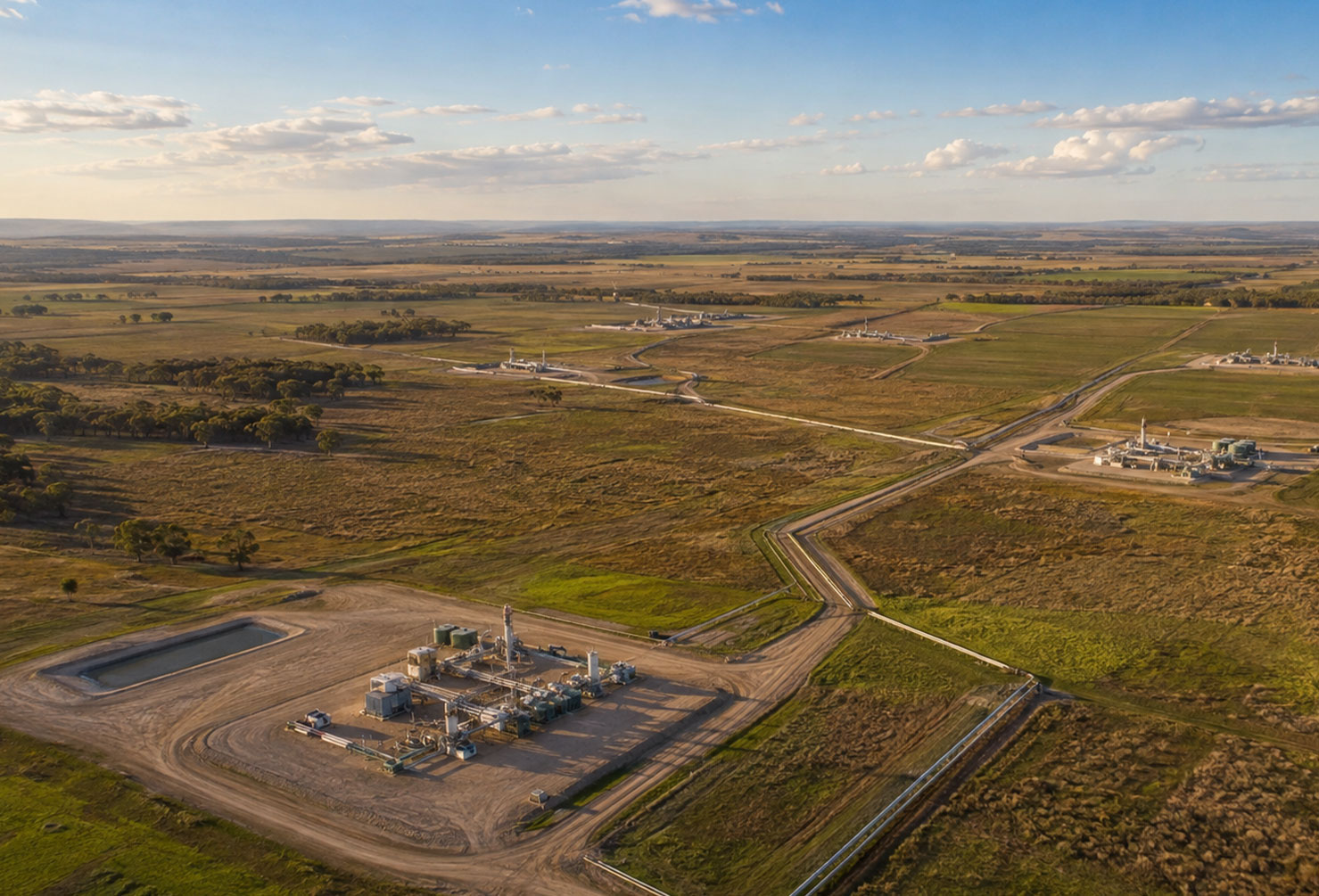
The VIC/P79 permit covers approximately 2,575 square kilometres in the shallow to moderate-depth waters of the Otway Basin offshore Victoria, with water depths ranging from approximately 40 metres in the north to around 100 to 200 metres in the south. The permit sits approximately 55 kilometres offshore from Port Campbell in western Victoria, close to the Pecten High trend where existing discovered gas fields including La Bella are connected by pipeline to the Athena Gas Plant operated by Amplitude Energy near Port Campbell.
That proximity to existing infrastructure is the commercial foundation of the permit’s development case. Any gas development within VIC/P79 has a plausible route to market through the Athena Gas Plant and the broader Otway Basin onshore processing and pipeline system without requiring standalone processing infrastructure. For a major operator assessing the economics of development, this infrastructure-led position is a material advantage over frontier plays with no nearby facilities.
3D Energi secured VIC/P79 through the 2020 Gazettal round and subsequently farmed down its position to ConocoPhillips, with the transaction completing in March 2023 following approval from the National Offshore Petroleum Titles Administrator. Under the farmout terms 3D Energi retained a 20% working interest, received A$4.22 million and ConocoPhillips took an 80% participating interest and operatorship. KNOC agreed to farm in during May 2025 and completed its entry in September 2025, acquiring 29% of both VIC/P79 and the adjacent T/49P permit. That brought ConocoPhillips’ interest in VIC/P79 from 80% to 51%. ConocoPhillips’ carry for up to US$65 million in gross drilling costs across both permits remained in place.
What the 2025-26 Exploration Drilling Campaign Found
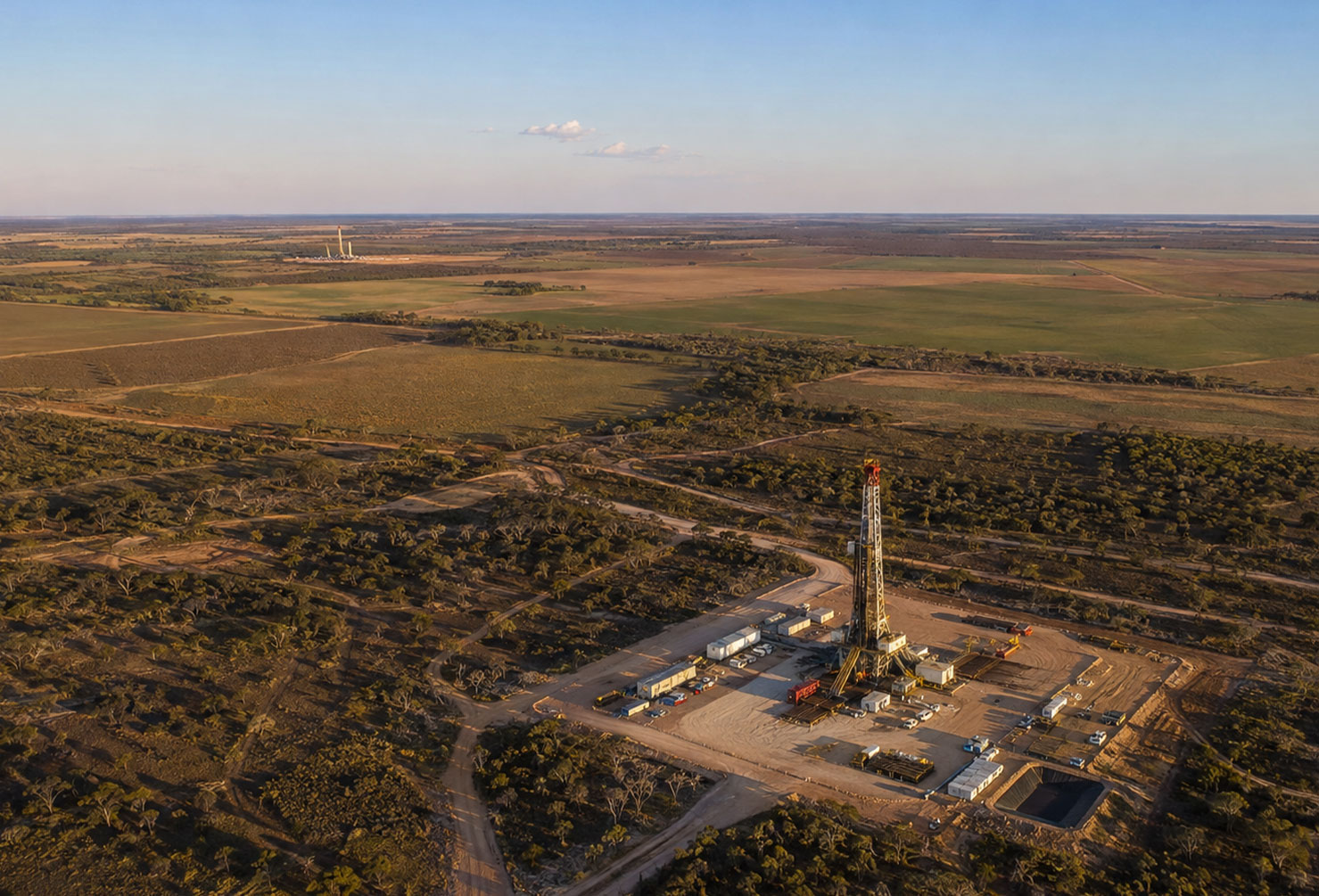
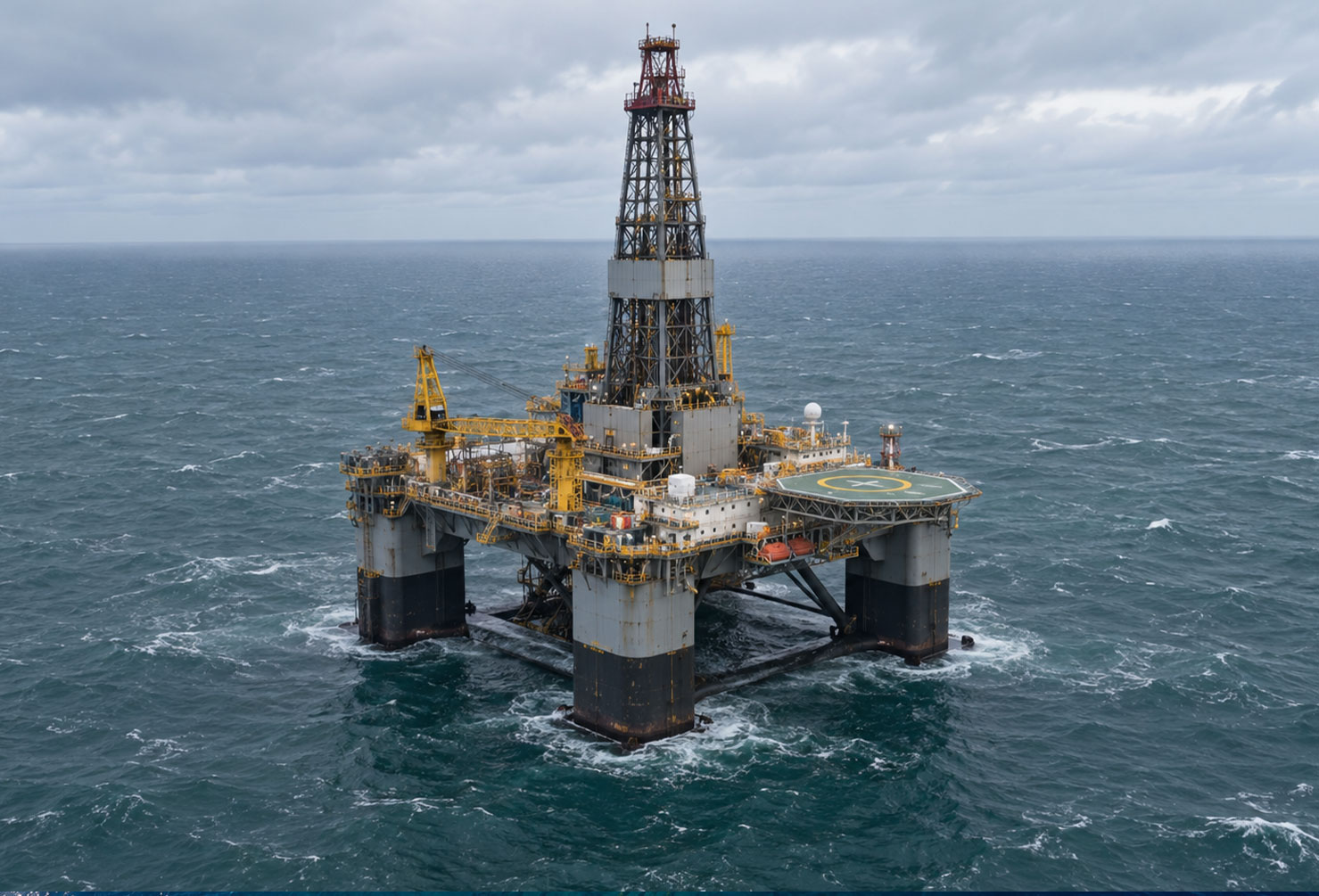
The 2025-26 Otway Exploration Drilling Program delivered two gas discoveries in VIC/P79, both drilled with the Transocean Equinox semi-submersible rig. The first was Essington-1, confirmed in November 2025 as a gas-condensate discovery. Formation testing validated reservoir quality and deliverability, with gas confirmed in both the primary Waarre A and the secondary Waarre C reservoirs, in line with pre-drill expectations. The second was Charlemont-1, within the Charlemont Trend.
Charlemont-1, spudded on 10 December 2025, delivered the more surprising of the two results. The well encountered gas in the Waarre C sandstone approximately 160 metres above the primary Waarre A target, at around 2,552 metres measured depth. The surprise shallower gas hit prompted a temporary pause in drilling while the JV assessed changes to the well design. Wireline logging was completed across the Waarre C, B and A sandstones. A gas sample recovered from the Waarre C at 2,571.2 metres confirmed hydrocarbons with a CO₂ concentration of 16 mol%, consistent with pre-drill predictions. In the Waarre A, elevated gas readings suggest probable hydrocarbon presence but further petrophysical analysis is required to confirm it. Modular formation dynamics tester pressure data could not establish a continuous gas column across the Waarre units and no fluid samples were recovered from the Waarre A. The confirmed discovery is in the Waarre C.
3D Energi executive chairman Noel Newell said the Charlemont result de-risks the up-dip prospects and that, if successfully appraised, the cluster could be among the largest gas pools in the Otway Basin. Together the two results confirm the effectiveness of an infrastructure-led exploration strategy targeting resources near existing offshore gas production and processing facilities.
ConocoPhillips has now confirmed that further work is underway to assess the development potential of the gas discovered in VIC/P79, and that the company is progressing an offshore project proposal aimed at bringing additional gas supply to the Australian domestic market. That development assessment work is what the JV is now focused on, and it is what makes the ConocoPhillips consolidation to 71% operating interest a commercially meaningful signal rather than just a JV dispute resolution.
How the JV Dispute Unfolded and What It Illustrates
Understanding the 3D Energi default is useful because disputes of this character are not uncommon in exploration JVs, and the resolution mechanism provides a clear illustration of how JV operating agreements protect operators and majority partners when a minority partner cannot meet its cash call obligations.
The dispute arose from the cost of the Charlemont-1 drilling program, which exceeded the initial budget. 3D Energi, a small-cap ASX-listed company with limited capital, was unable to meet its required contribution to the cost overruns. ConocoPhillips issued default notices under the joint operating agreement and ultimately a buyout notice, initiating the process that allows the operator to acquire a defaulting partner’s interest at a fair market value determined by an independent expert.
The valuation process was contested. 3D Energi sought at least double the US$19.8 million independently determined fair market value for its 20% interest. The JV agreement process prevailed and the independent valuation of US$19.8 million was the price paid. 3D Energi’s shares were suspended from trading on the ASX since January 2026 through the dispute period.
For the Otway Basin’s development trajectory, the resolution is straightforwardly positive. A motivated, well-capitalised operator with a 71% interest is better positioned to progress VIC/P79 toward development than a three-way JV in which one partner is in default and disputing the valuation of its stake. ConocoPhillips can now make development decisions about VIC/P79 with far less internal JV friction than existed during the dispute period.
What ConocoPhillips’s Position in the Otway Basin Actually Means
ConocoPhillips is not a newcomer to Australian domestic gas. The company holds a 47.5% shareholding interest in the Australia Pacific LNG project at Gladstone, which supplies approximately 20% of the east coast domestic gas market demand as well as LNG export volumes. APLNG is one of three Curtis Island LNG export facilities and one of Australia’s most significant pieces of energy infrastructure. ConocoPhillips’s commitment to Australian domestic gas supply is genuine and long-standing.
The Otway Basin VIC/P79 position adds a new dimension to that commitment: an offshore Victorian exploration and potential development program aimed specifically at the domestic east coast market, close to existing Otway Basin infrastructure, using a well-understood play type in the Waarre sandstone reservoirs that have produced gas from the Casino, Henry and Netherby fields for two decades.
Progressing an offshore project proposal for domestic gas supply from VIC/P79 would, if it proceeds to development, add another piece to the Otway Basin’s growing production profile alongside Amplitude Energy’s Annie field targeting 2028 first gas and the broader East Coast Supply Project covering Juliet, Elanora, Isabella and other prospects. The Otway Basin in 2026 has more active operators and more development-stage projects than at any point in its history.
The Workforce Implications
ConocoPhillips consolidating to 71% in VIC/P79 and committing to a development assessment program creates specific and near-term workforce demand in Victorian offshore.
Development assessment work on a discovered gas resource in offshore Victoria requires:
- Reservoir engineers and geoscientists to convert exploration well data into development-ready resource estimates, well designs and production forecasts. The Charlemont gas in the Waarre C, B and A sandstones needs to be characterised in enough detail to support a development concept and ultimately an investment decision.
- Subsea and offshore development engineers to evaluate tie-back options to the existing Otway Basin infrastructure, specifically the Pecten High trend pipelines and the Athena Gas Plant. The engineering assessment of a subsea tie-back from the VIC/P79 discoveries to existing facilities is the core technical work of the development assessment phase.
- Environmental and regulatory specialists for the offshore project proposal process. A new offshore project in Commonwealth waters requires an environment plan and NOPSEMA assessment. That process requires environmental scientists with offshore Otway Basin experience and familiarity with the specific marine environment of the south-eastern Australian coast.
- Petroleum economists and commercial advisors to assess the project economics, domestic gas pricing under the reservation scheme and the commercial framework for supply to the east coast market through existing Otway Basin infrastructure.
If the development assessment leads to a positive development decision, which is contingent on the technical and commercial outcomes of work that has not yet been completed, a second and larger wave of workforce demand follows. Subsea installation, umbilical and flowline contractors, offshore construction vessel crews, and ultimately the operational team that manages production from a new Otway Basin gas field all become relevant when a development is sanctioned.
The pace of that work, and the workforce demand it creates, is now in ConocoPhillips’s hands as a 71% operator rather than shared with a partner in dispute. That concentration of decision-making is likely to accelerate rather than slow the development timeline.
The Otway Basin Picture in September 2026
VIC/P79 is one piece of a larger picture that is worth viewing in full. The offshore Otway Basin in September 2026 has:
- Amplitude Energy progressing Annie toward 2028 first gas with a production licence granted, development works planned from 2027, and the broader East Coast Supply Project targeting multiple additional Waarre reservoir prospects.
- Amplitude and O.G. Energy drilling Juliet-1, targeting 48.8 Bcf gross mean prospective resource in the Waarre C in permit VIC/L24.
- ConocoPhillips and KNOC with two gas discoveries in VIC/P79, Essington-1 and Charlemont-1, and a development assessment program underway.
- The federal government opening five new Otway Basin exploration areas, welcomed by Australian Energy Producers as reaffirming the basin’s essential role in east coast gas supply.
The combined activity represents the most significant exploration and development momentum the offshore Otway Basin has seen in a generation. For operators sourcing Victorian offshore gas, the supply picture for the late 2020s and into the 2030s is improving incrementally with each new project that advances from exploration toward development. For workers with offshore Otway Basin experience, the demand for their specific knowledge of this basin, its play types, its existing infrastructure and its regulatory environment is broader than it has been at any time in recent memory.
ConocoPhillips resolving its JV dispute and consolidating to 71% is not the headline story of Australian upstream in September 2026. But it is a meaningful step forward for a permit that contains confirmed gas discoveries close to existing infrastructure in a basin that Australia’s east coast gas market badly needs to develop. The development assessment that now proceeds without the distraction of a JV dispute is the work that determines whether that potential becomes production.