
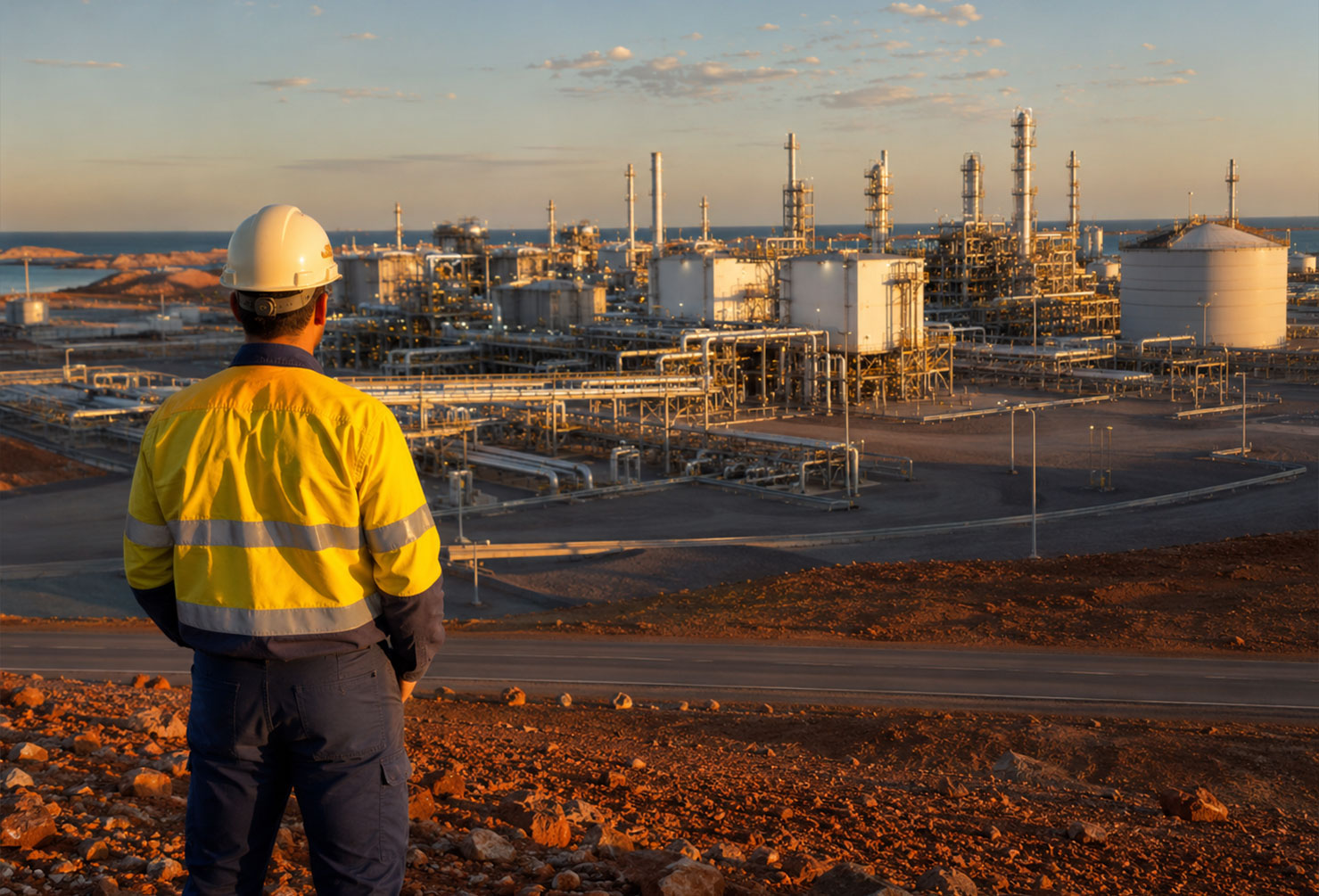
For workers who have spent the past few years on Scarborough’s construction program, or who have been part of Barossa’s build, a familiar moment is approaching or has already arrived. The cranes are coming down. The construction crews are thinning out. And the question of what comes next is getting more urgent.
The shift from construction to operations is one of the most significant and underappreciated career transition points in oil and gas. It is not simply a matter of staying on the same project in a different role. It requires a genuinely different skill set, a different working culture and, in many cases, a different way of thinking about the job. Workers who understand that difference and prepare for it are in a strong position in the current market. Those who assume the transition is straightforward, or who wait until construction winds down to start thinking about it, often find themselves on the back foot.
Construction and Operations Are Different Jobs
The distinction seems obvious when it is stated plainly, but its implications are regularly underestimated. Construction is fundamentally about building something. Progress is measured by what has been installed, connected, tested and signed off. The pace is often fast, the scope is evolving, and the tolerance for improvisation, while bounded by safety requirements, is higher than in an operating facility.
Operations is fundamentally about keeping something running reliably, safely and within defined parameters. Progress is measured by production targets, uptime, safety performance and compliance with operating procedures. The pace is steadier but the consequences of deviation are immediate and often severe. A valve that is operated incorrectly in a construction environment may create a rework task. The same valve in a live operating facility may create a serious process safety incident.
Workers who thrive in construction environments often do so because they are good at working with incomplete information, adapting to changing scope and pushing through problems under schedule pressure. Those are genuinely valuable capabilities. But operations environments reward a different profile: methodical procedure-following, disciplined documentation, attention to small deviations that might indicate larger problems, and a systematic approach to risk management that does not shortcut steps under pressure.
What the Operations Environment Actually Looks Like
Workers who have spent the bulk of their careers in construction may not have a clear picture of what an operating LNG or gas facility looks like from the inside. It is worth understanding before making the move.
Operating facilities run on procedure. Every routine task, and most non-routine ones, has a written procedure that needs to be followed. The role of a field operator or technician in an operating facility is not to determine how to do something but to do it correctly, document that it has been done and escalate if something is not as expected. For workers who are used to exercising significant judgment in construction environments, this level of procedural discipline can feel constraining at first.
Shift structures are different. Operating facilities run continuously. That means rotating shift work, handover protocols and a strong emphasis on the quality of shift handover communication. Information that is not clearly handed over between shifts is information that gets lost, and lost information in an operating facility creates risk. Workers who communicate well and document thoroughly have an advantage in this environment that they may not have needed to develop in construction.
The culture of a live facility is more risk-averse than a construction site in specific ways. The stop-work authority that exists on construction sites also exists in operating facilities, but the threshold for its exercise is calibrated to a different set of risks. Understanding when to raise a concern, how to raise it through the correct channels and how to document it accurately is a core competency in operations that takes time to develop.
Roles That Bridge the Gap Well
Not every construction role translates equally well to operations, and the path of least resistance is not always the most obvious one. Some of the transitions that work most consistently include:
Instrument technicians with construction experience in complex control systems are among the most sought-after people in operations environments. The ability to understand a control loop from the physical instrumentation through to the DCS interface, and to maintain and troubleshoot it in a live facility, is in high demand. Construction-phase instrument techs who have worked closely with commissioning teams and who understand how the systems were designed and set up are particularly valuable.
Mechanical fitters with rotating equipment experience carry skills that are directly relevant to operations maintenance. Compressors, pumps, turbines and associated seal systems require the same technical understanding in an operating facility as they do during construction and commissioning, with the additional requirement of working in a live process environment under more stringent permit-to-work controls.
Electrical technicians, particularly those with EEHA qualifications, are needed continuously in operating facilities where hazardous area electrical systems require ongoing maintenance, inspection and certification. The skills translate directly; the adjustment is to the procedural and documentation requirements of an operating environment.
Construction supervisors and leading hands with strong safety and documentation backgrounds can make the transition to operations roles such as permit-to-work coordinator or operations supervisor, though this typically requires additional training and a period of mentored exposure to the operating environment before taking on full responsibility.
What You Need to Do Before the Transition
The workers who make this jump most successfully tend to have done some preparation before the construction phase ends, not after. Practically, that means:
- Understanding what operations roles are available on the project you are currently working on and making your interest known to site supervision and the project’s operations readiness team before external recruitment begins
- Reviewing your certification status and identifying any gaps relevant to operations work, including specific operating procedure training, emergency response certifications or confined space and permit-to-work qualifications that may not have been required in construction
- Seeking out exposure to commissioning work on your current project if the opportunity exists, even in a supporting role, because commissioning experience is the single most valuable bridge between construction and operations backgrounds
- Being honest with yourself and your placement partner about the kind of environment you want to work in, because operations is a long-term commitment to a specific site and culture in a way that construction typically is not
If Operations Is Not the Right Move for You
Not every construction worker wants to move into operations, and that is a perfectly reasonable position. The lifestyle of a long-duration FIFO operations role, with its rotating shifts, extended site commitments and emphasis on procedural discipline, does not suit everyone.
For workers who want to stay in the construction environment, the pipeline of work in WA is not ending with Scarborough. Browse LNG pre-FID activity is already generating early-stage demand. Ongoing NWS brownfield work, the pipeline of shutdowns and turnarounds across WA’s operating facilities, and the infrastructure development associated with the Middle Arm Precinct in Darwin all represent continued construction-phase employment for workers who are well-positioned in that market.
The key is making a deliberate choice rather than a reactive one. Construction workers who understand what they want from the next phase of their career and who position themselves accordingly, whether that means pursuing operations, stepping into commissioning, or moving to the next major construction program, consistently come out of project transitions in better shape than those who wait to see what comes up.